
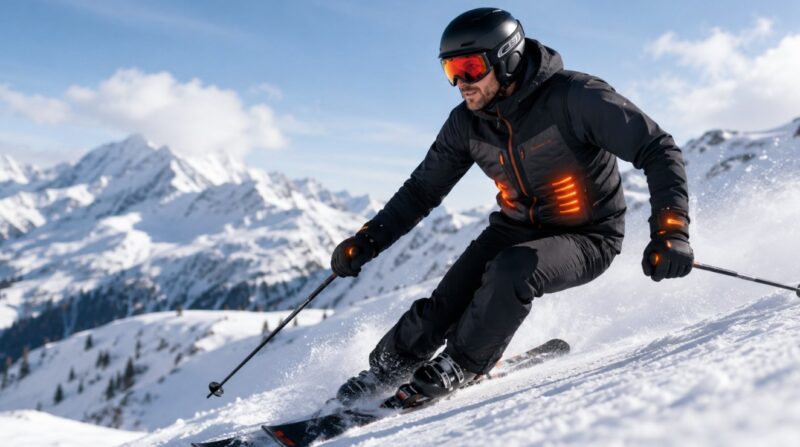
Cold-weather sports should feel invigorating, not grueling. Yet every season, many skiers, snowboarders, winter cyclists, and motorcyclists see the same thing happen: hands and feet get cold first, technique becomes sloppy, and you start riding more defensively.
Modern heated clothing is no longer bulky or gimmicky. Most items use thin carbon-fiber heating elements integrated into specific zones and powered by rechargeable lithium-ion batteries. With three heat settings on many models, you can add warmth when needed and dial it back as soon as you start moving more intensely.
Whether you’re heading out for a full day on the slopes, commuting through freezing temperatures, or planning a long winter ride, staying warm plays an important role in both comfort and performance. Cold muscles and stiff joints require more effort to move efficiently, while warm extremities allow you to focus on your surroundings instead of constantly thinking about the temperature. Heated clothing provides a practical solution for active people who spend long periods outdoors, helping them stay comfortable without relying solely on multiple bulky layers.
Unlike traditional winter clothing, heated garments actively generate warmth instead of simply trapping body heat. This makes them particularly useful during periods of inactivity, such as sitting on a ski lift, taking a break during a cycling route, or waiting at traffic lights on a motorcycle. Instead of experiencing the rapid drop in temperature that often follows physical activity, the integrated heating elements help maintain a more consistent level of warmth.
Why heated ski gloves and heated socks change the day
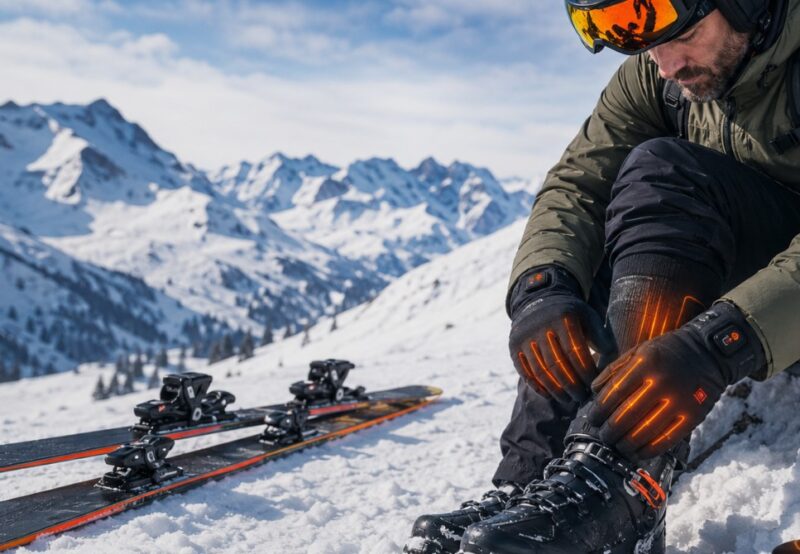
When your fingers stiffen, you lose fine motor control. On the slopes, that means less effective pole planting, slower binding adjustments, and less grip. On a bike, you’ll notice it in delayed braking or fumbling with zippers and fasteners.
Layering helps, but it has one weakness: sweat. If you overheat on a climb, moisture builds up. As soon as you stop, get on the lift, or feel the wind chill, that damp layer cools down quickly.
Heated gear lets you regulate your temperature in real time. Instead of adding another layer, you use a controlled heat source. When used properly, this reduces the stop-start cooling that often cuts sessions short.
Another advantage is consistency. Rather than relying on changing weather conditions or hoping your body generates enough heat, heated gloves and socks provide predictable warmth throughout the day. This is especially valuable during early morning starts, late afternoon descents, or cloudy days when temperatures remain well below freezing.
Comfort also contributes to confidence. When your hands remain warm, operating ski poles, adjusting goggles, opening backpack zippers, or handling equipment becomes much easier. Likewise, warm feet make it easier to maintain proper balance and posture while skiing or snowboarding. Instead of constantly wiggling your toes to restore circulation, you can stay focused on technique and enjoy the experience.
For people who naturally have poor circulation or frequently experience cold hands and feet, heated accessories can make winter sports significantly more enjoyable. Rather than ending the day early because of discomfort, many users find they can comfortably spend several additional hours outdoors.
What to look for in heated ski gloves
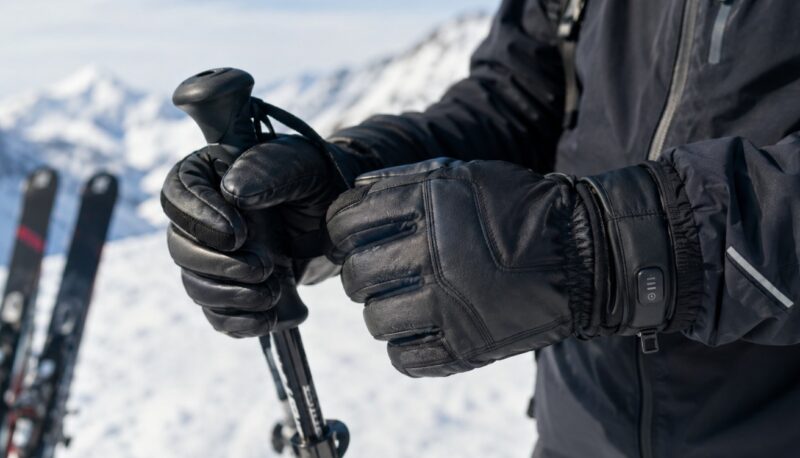
For sports use, warmth and flexibility must go hand in hand. Look for insulation zones across the fingers and the back of the hand, a cuff that seals securely under or over your jacket, and controls that are easy to operate with your other glove on.
Battery placement is also important. A compact battery pack near the cuff is usually less of a hindrance than a large unit on the back of the hand.
Water resistance is another important feature to consider. Snow, melting ice, and wet chairlifts expose gloves to moisture throughout the day. High-quality heated ski gloves combine waterproof outer materials with breathable membranes that help prevent moisture from building up inside the glove. This keeps your hands dry while maintaining the effectiveness of the heating system.
Fit also matters. Gloves should feel snug enough to allow good dexterity without restricting circulation. Gloves that are too tight can reduce blood flow, while oversized gloves may feel bulky and reduce grip. Trying to find the right balance between insulation, flexibility, and comfort will improve the overall experience on the slopes.
Durability is equally valuable for frequent winter sports enthusiasts. Reinforced palms, strong stitching, and abrasion-resistant materials help gloves withstand repeated use with ski poles, snowboard bindings, and other equipment. Investing in quality construction often means the gloves continue performing well over multiple winter seasons.
Heated socks and heated insoles for ski boots
Ski boots can restrict blood flow, especially if you tighten the buckles for a secure fit. Heated socks often concentrate the heat around the toes, while heated insoles provide warmth from below without adding bulk to your socks.
If your boots already feel tight, insoles are often the better solution. If you mainly experience discomfort on chairlifts, toe-focused heated socks may be sufficient.
Both options have their own advantages depending on your preferences and the fit of your boots. Heated socks typically offer a more natural distribution of warmth around the foot, while heated insoles can often be transferred between different pairs of footwear, making them a versatile investment for multiple winter activities.
Long ski days frequently involve changing conditions throughout the day. Morning temperatures may be well below freezing, while afternoons become slightly warmer due to sunshine. Adjustable heating levels allow users to respond to these changes without constantly adding or removing clothing. This flexibility helps maintain comfort regardless of weather fluctuations.
People participating in other winter activities can also benefit from heated socks and insoles. Winter hikers, hunters, anglers, photographers, and anyone spending extended periods outdoors often experience cold feet due to prolonged standing or limited movement. Heated footwear accessories provide additional warmth in situations where traditional insulation alone may not be enough.
Heated vests and gilets for core warmth
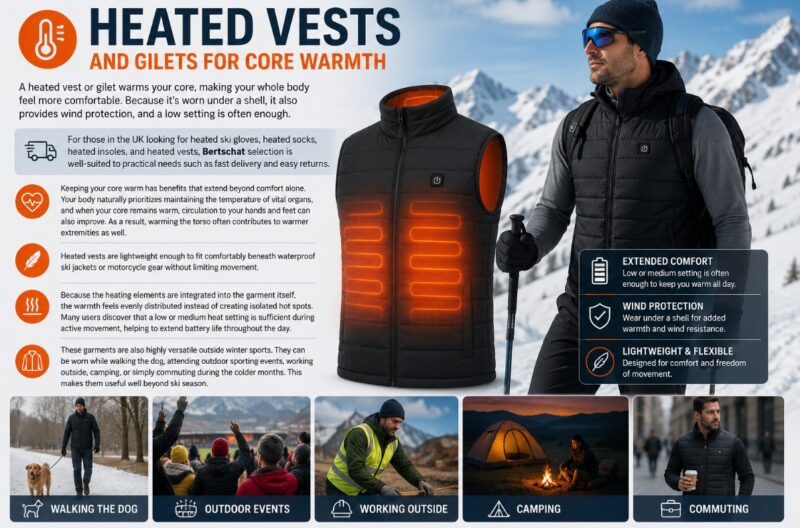
A heated vest or gilet warms your core, making your whole body feel more comfortable. Because it’s worn under a shell, it also provides wind protection, and a low setting is often enough.
For those in the UK looking for heated ski gloves, heated socks, heated insoles, and heated vests, Bertschat selection is well-suited to practical needs such as fast delivery and easy returns.
Keeping your core warm has benefits that extend beyond comfort alone. Your body naturally prioritizes maintaining the temperature of vital organs, and when your core remains warm, circulation to your hands and feet can also improve. As a result, warming the torso often contributes to warmer extremities as well.
Heated vests are lightweight enough to fit comfortably beneath waterproof ski jackets or motorcycle gear without limiting movement. Because the heating elements are integrated into the garment itself, the warmth feels evenly distributed instead of creating isolated hot spots. Many users discover that a low or medium heat setting is sufficient during active movement, helping to extend battery life throughout the day.
These garments are also highly versatile outside winter sports. They can be worn while walking the dog, attending outdoor sporting events, working outside, camping, or simply commuting during the colder months. This makes them useful well beyond ski season.
How to use battery heated clothing efficiently
Do
- Start on a low setting while moving and increase the heat during ascents, descents, or breaks.
- Keep spare batteries warm in an inside pocket in extreme cold.
- Combine heated layers with a windproof outer layer.
Do not
- Don’t leave the highest setting on all day; that drains the batteries faster and can cause you to sweat.
- Don’t wear too many layers on top of heated midlayers.
- Don’t ignore the maintenance instructions for connectors and battery packs.
Charging batteries before every outing is another simple habit that prevents unexpected interruptions. Most lithium-ion batteries perform best when fully charged, and checking battery levels before leaving home ensures you have sufficient power for the duration of your activity.
It’s also worth becoming familiar with the controls before heading outdoors. Learning how to change heat settings while wearing gloves makes it much easier to adjust warmth without removing your equipment in freezing conditions.
Proper storage can help extend the lifespan of both batteries and garments. After use, allow clothing to dry completely before storing it in a cool, dry place. Batteries should generally be stored partially charged if they will not be used for an extended period, following the manufacturer’s recommendations.
Warmth that keeps you outside longer
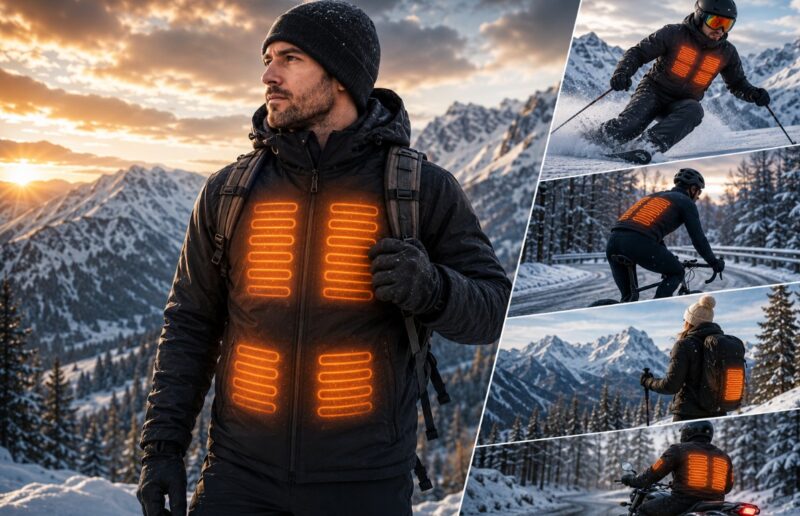
Heated clothing isn’t a substitute for proper layering, but it does address the weak spots that cut your days short. Choose items that are right for your sport, use sensible heat settings, and get the most out of your session.
As battery technology continues to improve, heated clothing has become lighter, more reliable, and more practical than ever before. Modern systems provide hours of adjustable warmth without adding significant weight, allowing athletes and outdoor enthusiasts to move freely while remaining comfortable.
Whether you’re carving down mountain slopes, cycling through icy roads, hiking snowy trails, or riding a motorcycle during the winter months, maintaining a comfortable body temperature helps you stay focused on the activity itself. Instead of allowing cold hands, numb feet, or a chilled core to dictate when your day ends, heated clothing gives you greater control over your comfort.
By combining high-quality winter layers with intelligently designed heated garments, you can spend more time outdoors, enjoy longer sessions, and maintain confidence in changing weather conditions. The result is a more enjoyable winter experience where performance, comfort, and warmth work together throughout the entire day.